Foundations of freedom: How the first constitutions shaped modern democracy
Throughout history, the concept of a written constitution has played a crucial role in shaping modern governments. These foundational documents define the structure of the state, the powers of its institutions, and the rights of its citizens.
While many associate the origins of constitutional government with Europe, the very first codified national constitution was created elsewhere.

The United States of America holds the distinction of being the first country to draft and implement a written constitution. After declaring independence from British rule in 1776, the newly formed states initially operated under the Articles of Confederation.
However, this system quickly revealed its weaknesses, prompting leaders to convene in 1787 at the Constitutional Convention in Philadelphia. There, they created a new framework for governance, culminating in the adoption of the U.S. Constitution on September 17, 1787.
This document, which came into effect in 1789, laid the foundation for a balanced system of government with separated powers among legislative, executive, and judicial branches.
It also introduced the principle of federalism and provided a clear method for amendments, allowing it to adapt to future needs.
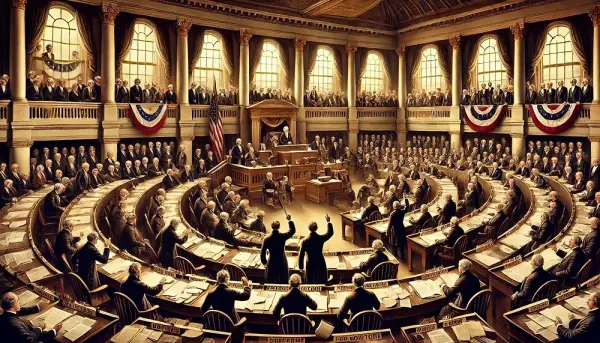
Not long after, Poland followed suit by enacting its own written constitution on May 3, 1791. This marked the first such document in Europe and the second globally. Poland’s constitution aimed to modernize its political system and reduce the chaos brought on by outdated practices, particularly the liberum veto, which had often paralyzed decision-making.
Although Poland's constitution was short-lived due to external pressures and military intervention by neighboring powers, it remains a historic symbol of democratic ideals and national reform.
The legacy of these early constitutions continues to influence the world. Today, nearly every independent nation has adopted some form of a written constitution, underscoring the enduring impact of this governance model.
These documents serve as safeguards for individual freedoms, limitations on governmental power, and blueprints for fair and just societies.

In conclusion, the drafting of the U.S. Constitution marked a turning point in world history, establishing the precedent for modern constitutional democracy.
Poland's contribution shortly thereafter showed that the desire for lawful governance and individual rights was not confined to one nation but part of a broader human aspiration for order, liberty, and justice.