The birth of written letters: Tracing the origins of communication across ancient civilizations
The history of written communication is both ancient and complex, with its roots stretching back to the earliest civilizations.
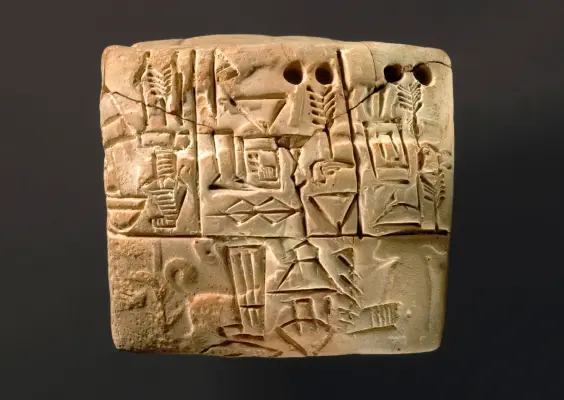
While it’s challenging to identify the absolute first letter, the origins of written correspondence can be traced to around 2,000 BCE in Mesopotamia, where cuneiform writing was first developed by the Sumerians.
Cuneiform was one of the earliest known writing systems and set the stage for future written communication.
One of the earliest known instances of written letters comes from ancient Egypt during the New Kingdom period, around 1500 BCE.
However, if we’re looking for a specific letter from ancient times, the *Letter of El-Amarna*, dating to approximately 1350 BCE, stands out. These letters were sent by Egyptian pharaohs to rulers in the Near East, dealing with diplomacy, alliances, and political matters.
While these letters are significant, early written communication also appears in the form of Sumerian texts, some of which date back to around 2,300 BCE.
These early writings were primarily administrative, legal, or commercial in nature, indicating that written correspondence for practical purposes was already developing.
However, these texts did not generally reflect personal letters in the way we think of them today.

In the El-Amarna Letters, we can see the beginning of written communication between leaders, showing how early letters were used to manage power, political relationships, and treaties.
These letters, typically inscribed on clay tablets in Akkadian, the diplomatic language of the time, provide evidence of how writing played a key role in governance and diplomacy.
The transition from formal to more personal communication came with the development of alphabetic writing systems, such as the Phoenician alphabet around 1,000 BCE.
These innovations paved the way for written correspondence in everyday life, and by the Roman Empire, personal letters were becoming increasingly common.
Such letters were exchanged between people from all walks of life, including citizens, politicians, and merchants, and were integral to social and political life.
Though it’s difficult to pinpoint the very first letter, the early records of correspondence from Mesopotamia, Egypt, and the Near East offer a glimpse into how writing emerged as a tool for both official and personal communication.

These early forms of written language not only helped maintain political power and trade but also set the groundwork for the letters we continue to write today.