

The origins of military operations: The first countries to develop military strategy and why they pursued them
Military operations have been a part of human history for thousands of years, and they began long before modern warfare and organized armies. The earliest examples of military operations were shaped by the need for survival, territorial expansion, and the protection of resources.
This article explores some of the first countries and civilizations to implement military operations and why they sought to develop such strategies.
Ancient Egypt: The birth of strategic military operations
Ancient Egypt, around 3,000 BCE, is one of the earliest known civilizations to develop a formal military structure. Pharaohs like Narmer, who unified Upper and Lower Egypt, relied heavily on military campaigns to consolidate their power and protect Egypt’s borders. The creation of Egypt’s military forces stemmed from the need to safeguard the fertile Nile Valley from external threats and to expand Egypt's territory, especially during the New Kingdom (c. 1550-1070 BCE).
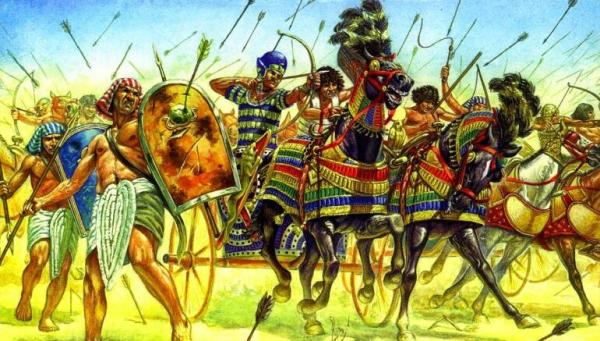
The Egyptians’ military operations focused on conquering neighboring lands, securing trade routes, and ensuring a steady flow of resources, such as gold and copper, which were vital for the country’s economy. They used chariots in warfare, an innovative military tactic at the time, which gave them an advantage on the battlefield.
Why Egypt used military operations:
Territorial expansion: Egypt needed to expand its influence and protect its borders, especially from nomadic tribes and neighboring powers like the Hittites.
Resource acquisition: Military campaigns helped secure vital resources that were not available within Egypt's borders.
Political stability: Conquering other regions helped reinforce the authority of the Pharaoh, as military victories were symbolic of divine favor.
Sumer and Mesopotamia: The role of city-states in early military tactics
The Sumerians, who inhabited the region of Mesopotamia around 3,000 BCE, were among the first to create organized military operations. The Sumerians developed the concept of the city-state, with each city functioning as an independent political entity. These city-states, such as Ur, Lagash, and Uruk, often engaged in conflicts over resources, territory, and political dominance.

The Sumerians are credited with creating some of the earliest known military tactics and weaponry, including the use of the bow and arrow, the spear, and the creation of fortified walls around cities. They also pioneered the use of professional soldiers, transitioning away from relying solely on conscripted farmers and herders during times of war.
Why Sumerians used military operations:
Defending city-states: City-states in Sumer frequently faced threats from neighboring city-states or nomadic groups, requiring organized military responses.
Territorial expansion: As city-states competed for resources, military operations were a way to conquer neighboring lands.
Economic control: Access to fertile land and trade routes was crucial for survival, making military operations a tool for securing resources and trade dominance.
The Assyrian Empire: Military innovation and brutality
The Assyrian Empire (911-609 BCE), which spanned much of the ancient Near East, is another key example of a civilization that excelled in military operations. The Assyrians were notorious for their ruthless military tactics and innovations, which included the use of siege warfare, advanced engineering (such as battering rams), and psychological warfare to instill fear in their enemies.
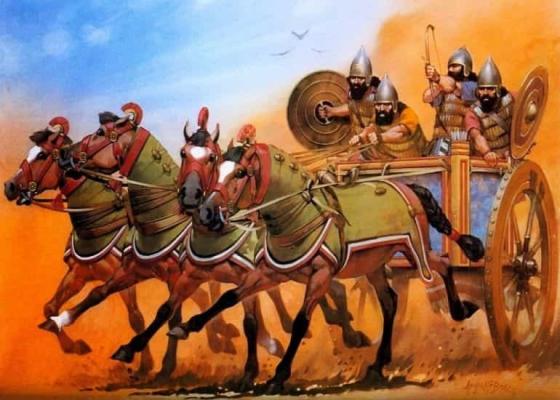
Assyrian kings, like Tiglath-Pileser III and Ashurbanipal, expanded the empire through brutal military campaigns. The Assyrians were also among the first to establish permanent standing armies, rather than relying solely on conscripted forces. This allowed them to maintain a constant military presence across their vast empire.
Why the Assyrians used military operations:
Expansion and conquest: The Assyrians used military operations to conquer neighboring regions and extend their empire.
Maintaining power: As the Assyrian Empire grew, it required military operations to maintain control over diverse and often rebellious territories.
Intimidation and control: Assyrian military operations were designed not just for conquest but also to instill fear and prevent uprisings. The famous brutal tactics were as much about psychological domination as physical conquest.
The Ancient Greeks: The dawn of tactical military thinking
The ancient Greeks, particularly during the 5th century BCE, revolutionized military operations through the development of advanced strategies and tactics. The city-state of Sparta is often cited as an early example of a society that prioritized military excellence. Spartans created one of the most disciplined and formidable armies in history, known for their phalanx formation, which relied on heavily armed infantry working together in tight formation.
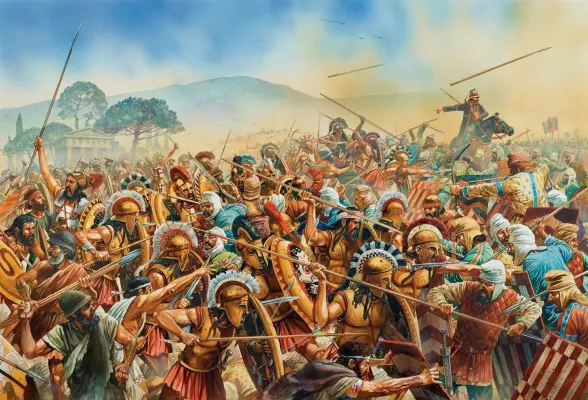
The Greeks also created a system of alliances known as the Delian League, which allowed for collective defense against common enemies like the Persian Empire. The Persian Wars (499-449 BCE) marked a pivotal moment in military history, as Greek city-states, under the leadership of Athens, employed strategic military operations to defeat a much larger Persian force.
Why the Greeks used military operations:
Defense against invaders: The Persian invasions posed a major threat to the Greek city-states, which led to the need for coordinated military action to defend against foreign domination.
Preservation of independence: Greek city-states valued their autonomy, and military operations were crucial in maintaining independence from larger, more powerful empires.
Strategic innovation: The Greeks were among the first to develop a formal theory of war, with generals like Pericles and Themistocles using strategic military operations to defeat the Persians and expand Greek influence.
Ancient China: The Warring States Period
In China, military operations became increasingly important during the Warring States Period (475-221 BCE), when several powerful states fought for dominance. The most famous figure from this era is Sun Tzu, author of The Art of War, a seminal work on military strategy and tactics. Sun Tzu’s treatise emphasized the importance of strategy, deception, and flexibility in military operations, making it one of the most influential military texts in history.
During the Warring States Period, military operations were not only about defeating enemies but also about managing internal politics, maintaining alliances, and ensuring the stability of the state. The Qin state, under the leadership of Qin Shi Huang, eventually emerged victorious and unified China, largely through effective military campaigns and operations.
Why Ancient China used military operations:
Unification of China: The Warring States Period was marked by constant warfare between rival states. Military operations were essential for consolidating power and uniting China under a single ruler.
Strategic superiority: Chinese military leaders like Sun Tzu emphasized the importance of intelligence, flexibility, and deception in military campaigns, which allowed them to outmaneuver opponents.
Political control: Warfare in China was not just about territorial control but also about maintaining internal political power. Military operations helped secure the loyalty of vassals and prevent uprisings.
The origins of military operations are deeply intertwined with the early human need for survival, territorial expansion, and resource acquisition.
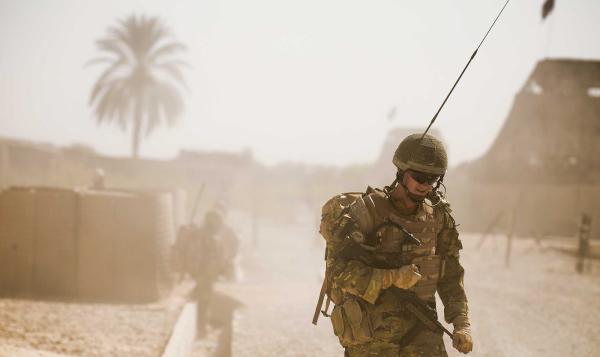
From ancient Egypt to China, early military operations laid the foundation for modern warfare, where strategy, tactics, and innovation played crucial roles in determining the outcomes of battles and the fates of civilizations.
Whether driven by the need to conquer new lands, protect valuable resources, or assert political dominance, these early military operations were integral to the rise and fall of empires and the shaping of the world’s history.


